Prediction markets have evolved from a niche corner of the internet into a mainstream financial and cultural conversation.
As platforms make it easy to wager on everything from elections to economic trends, more Americans are exploring whether these markets offer a legitimate way to apply knowledge or are simply another form of risk-taking — or worse, a scam.
What is a prediction market?
A prediction market is a platform where people bet on the outcome of future events. This is done by buying and selling contracts, and unlike traditional gambling platforms, it pits participants against other users, rather than against “the house.”
Each contract typically represents a specific question with a clear result, such as “Will Candidate X win the election?” or “Will X win Best Picture?” Participants trade based on what they believe is most likely to happen. If their prediction is correct, they can profit; if it’s wrong, they lose money.
1 in 4 Americans have placed a bet on prediction markets
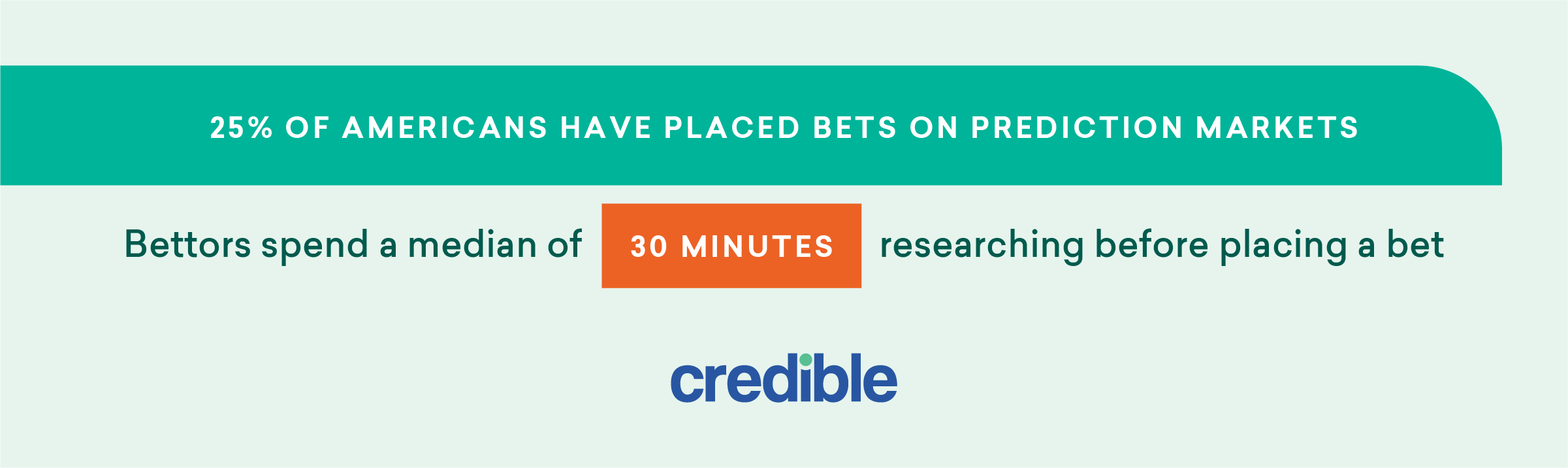
With 1 in 4 Americans reporting that they’ve placed prediction market bets, participation is no longer limited to highly engaged or specialized audiences. Among those who have participated, the median time spent researching before placing a bet is 30 minutes.
Among Americans who have participated in prediction markets, those who claimed a gain (63%) or a loss (29%) reported median earnings of $200 and median losses of $100, respectively. However, self-reported gains aren’t necessarily reflected in reality. According to a recent report from The Wall Street Journal (paywalled link), there are almost three times as many losers as winners on Kalshi.
Perceptions of risk in prediction markets
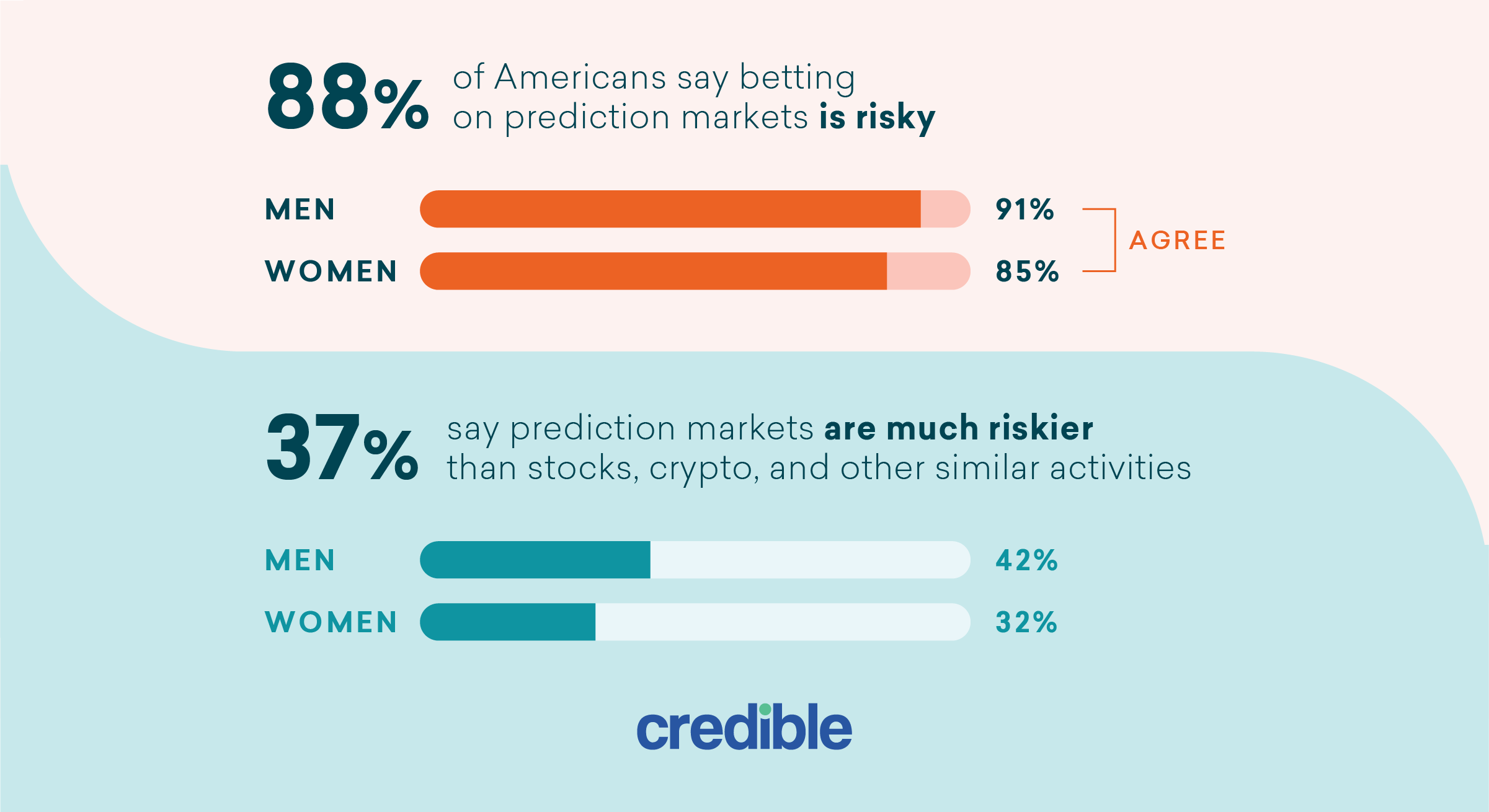
Prediction markets carry a near-universal reputation for risk: 88% of Americans view them as risky, a perception shared across gender lines (91% of men, 85% of women) and generations (91% of Gen Z, 88% of millennials).
When compared to other financial activities, opinions are more divided. While 37% of Americans say prediction markets are much riskier than stocks or crypto, an opinion held by more men (43%) than women (33%), over half (56%) believe the level of risk is about the same.
Despite perceived risk, Americans appear to be enjoying prediction markets: 57% of Americans find them more entertaining than other financial activities, with women (59%) edging out men (56%).
As for personal risk tolerance, most Americans describe themselves as balanced (53%), while 40% identify as very risk-averse.
“The perception that prediction markets carry the same level of risk as stocks or crypto highlights just how dangerous they can be,” says Credible Senior Loans Editor Meredith Mangan. “With most prediction market bets, you lose everything if you’re wrong. This is distinctly different from investing in crypto or stocks — which typically retain some value even when prices fall. If this distinction isn’t understood, participants may bet with a false sense of security — one that could quickly turn into outsized, irreversible losses.”
69% of Americans say prediction markets need more oversight
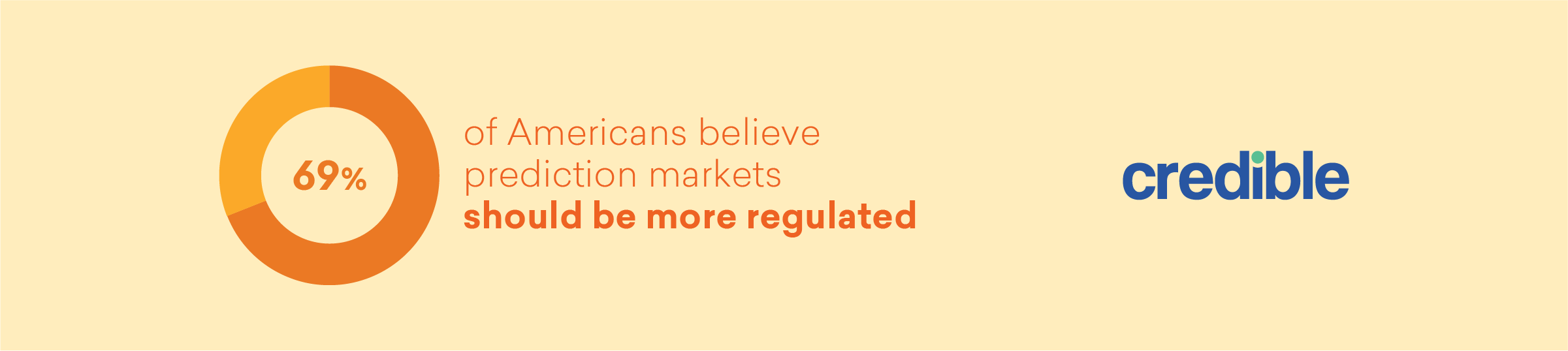
Nearly 7 in 10 (69%) Americans think prediction markets should be more regulated. Currently, prediction markets operating in the U.S. need to be certified by the Commodity Futures Trading Commission (CFTC), the federal regulator of prediction markets. Prediction markets are vulnerable to insider trading, where someone with insider knowledge of an event can use prediction market contracts to earn money. In response, the CFTC has stepped up enforcement against insider trading, and the platforms themselves are taking steps to prevent it.
The recent indictment of a U.S. soldier provides an example of how insider information might be used in prediction markets. Federal prosecutors allege that a Special Forces master sergeant used his knowledge of classified information about the military operation to remove Venezuelan President Nicolas Maduro to win more than $400,000 trading on Polymarket. The soldier has pleaded not guilty to the charges, which include unlawful use of confidential government information for personal gain, commodities fraud, and wire fraud.
Our survey found that support for increased regulation is consistent across demographics, with 71% of men and 68% of women saying prediction markets should be more regulated, along with 74% of Millennials.
The specifics reveal even stronger sentiment: 82% believe prediction markets should be regulated similarly to gambling, and 59% say certain topics, particularly those that are culturally or morally sensitive, should be off-limits entirely.
Nearly 4 in 5 Americans (79%) say they would be concerned if their partner regularly placed bets in prediction markets.
“While prediction markets are relatively new, gambling is not. And Americans appear alert to the potential ramifications of both unregulated betting and unregulated financial markets,” says Mangan. “We’re already seeing early signs of abuse, like insider trading, which underscores the urgent need for clearer rules and strong safeguards.”
Betting or financial tool? Perceptions of prediction markets
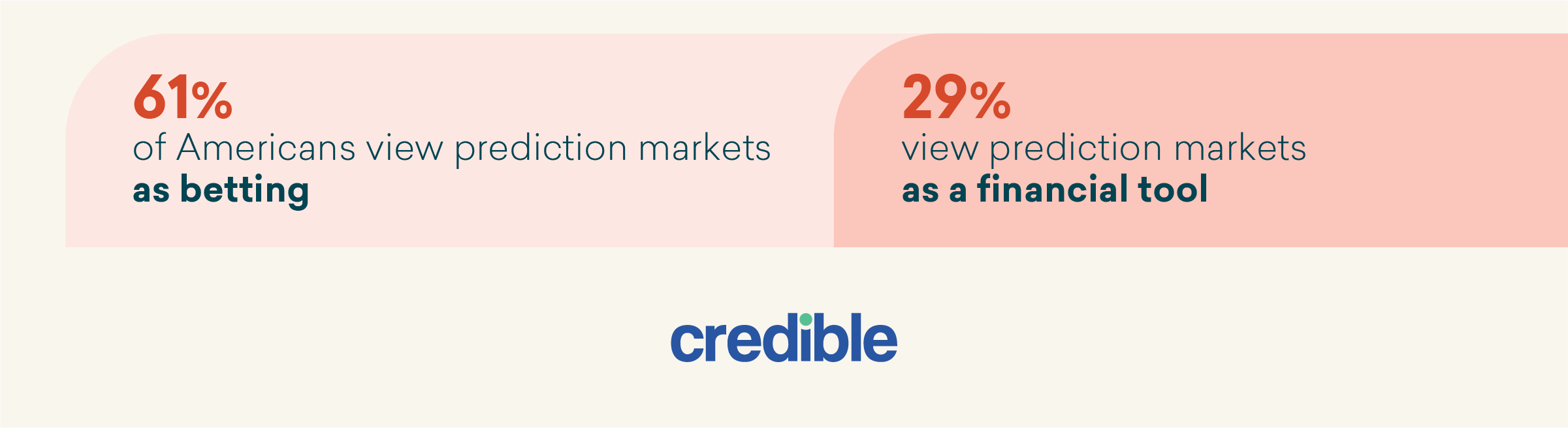
Americans are split on what prediction markets fundamentally are. More than 3 in 5 (61%) Americans view prediction markets as betting, and 29% view prediction markets as a financial tool.
They also aren’t fully confident when it comes to understanding what prediction markets are and how they work, with 63% saying they somewhat understand them and 22% saying they do not understand them. Despite this, there is widespread recognition of their growth: 90% believe prediction markets are becoming more popular.
Confidence in making informed decisions varies by topic. Americans feel most equipped to bet on politics or elections (41%), followed by sports (40%), financial markets or stocks (37%), entertainment (34%), and global events (27%). Notably, 60% believe that personal expertise genuinely improves your odds of success.
Half of non-users are open to trying prediction markets

Interest in prediction markets runs high even among those who haven't participated. Half of non-users (50%) say they'd be willing to try prediction markets, driven primarily by the prospect of financial gain (71%), followed by entertainment (42%) and the appeal of testing their knowledge (34%). Preparation matters to respondents, as 80% say they'd feel more confident placing a bet if they researched first.
For those not participating, the reasons are clear: risk of losing money (86%) is the top concern, followed by lack of trust in platforms (40%) and not understanding how prediction markets work (33%).
When asked which topics would draw them in, entertainment ranks highest at 48%, followed by sports events (35%) and politics or elections (33%).
Methodology
In April 2026, Credible commissioned Digital Third Coast and Prolific to conduct a survey of 1,003 people ages 18 to 81 from across the U.S. about prediction markets. Among respondents, 50% identified as male, 49% as female, and 1% non-binary/rather not say. The respondents represented all 50 states, plus Washington, D.C., and one U.S. territory, and had a median age of 39.
For media inquiries, contact [email protected].
Fair use
When using this data and research, please attribute it by linking to this study and citing Credible.