Many Americans are beginning the new year with a close eye on their finances after overspending during the holidays. Credible’s nationwide survey found that holiday spending and debt weigh heavily on many households as 2026 begins.
38% spent more on holiday expenses in 2025 than last year
Compared to 2024 holiday spending, 38% of Americans reported spending more in 2025, 36% spent less, and 26% spent the same amount.
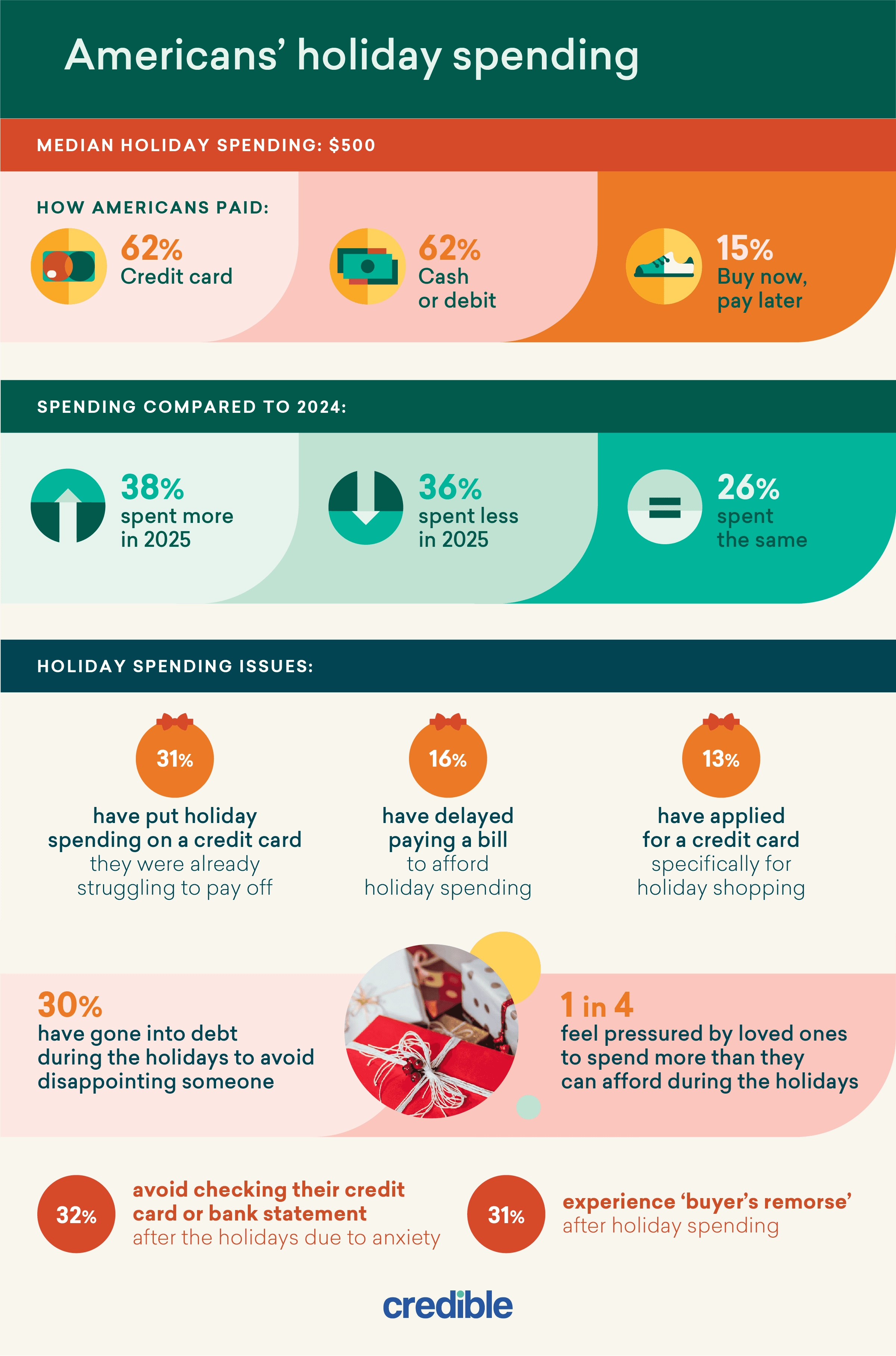
Americans reported a median holiday spend of $500, with most relying on multiple payment methods. Credit cards and cash/debit cards were each used by 62% of consumers, while 15% turned to buy now, pay later services (such as Klarna or Afterpay).
For many, holiday overspending is an ongoing issue: Nearly 1 in 3 (31%) put holiday spending on a credit card they were already struggling to pay off during one or more past holiday seasons. Additionally, 16% delayed paying a bill to afford holiday spending and 13% applied for a credit card specifically for holiday shopping.
Read More: Best Credit Card Consolidation Loans
Editor insight: “It can be difficult, but it’s important to prevent overspending during the holidays. One way is to limit credit card use and be intentional about it. If you’re going to borrow for gifts, food, travel, or festivities, itemize your spend in advance and set a budget. Then, make a plan to pay it back. For everything else, use a debit card or cash and keep tabs on your account balances.”
— Meredith Mangan, Senior Loans Editor, Credible
Emotions and peer pressure can also impact spending: 30% have gone into debt during the holidays to avoid disappointing someone and 1 in 4 feel pressured by loved ones to spend more than they can afford during the holidays. This may explain why nearly 1 in 3 (32%) avoid checking their credit card or bank statement after the holidays due to anxiety and 31% experience “buyer’s remorse” after holiday spending.
Gift spending cited as top cause of holiday debt
A quarter of Americans (25%) took on debt during the 2025 holiday season — the primary driver was gift spending (63%), followed by everyday living expenses (25%) and holiday travel, food and decor costs (12%).
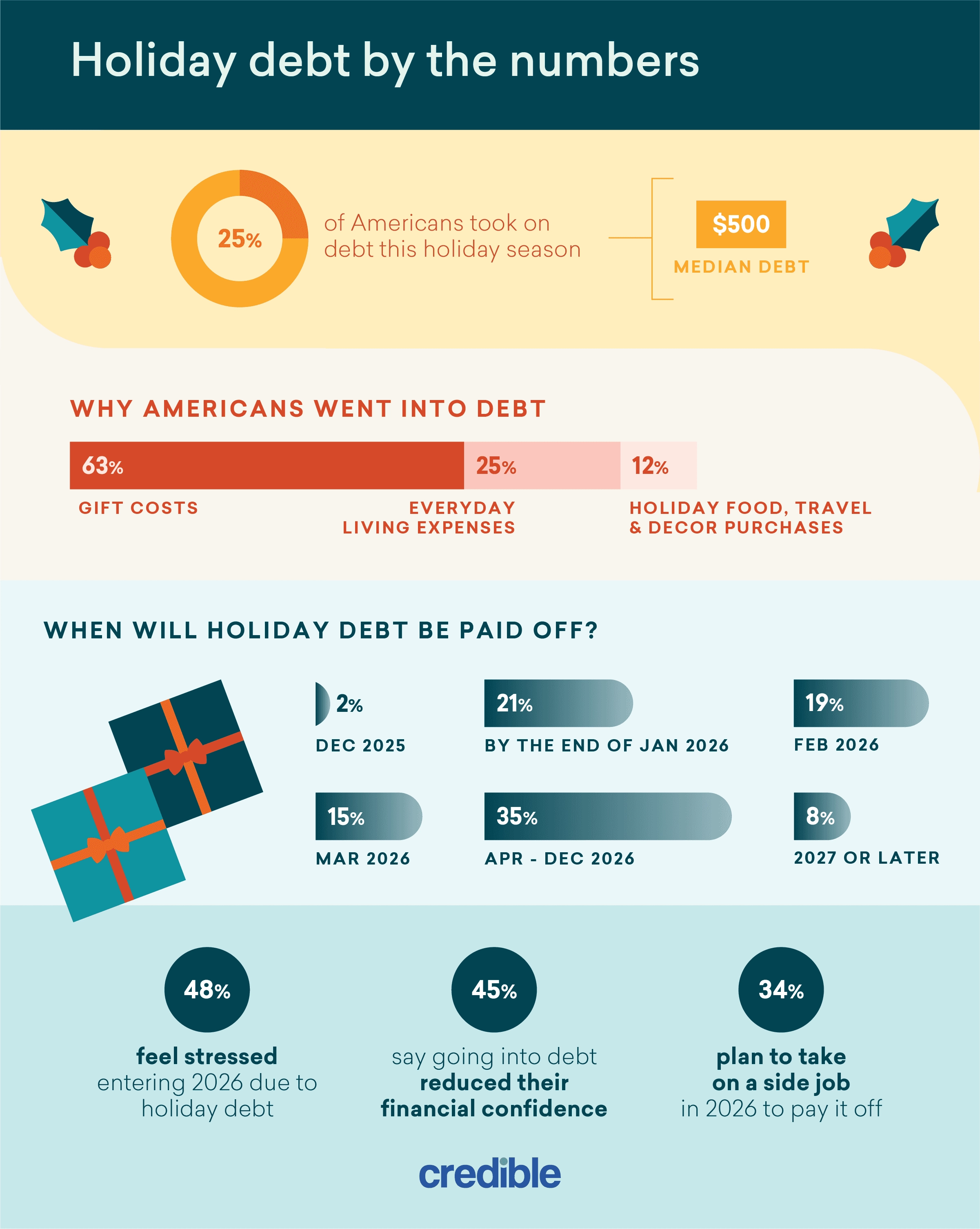
While some expect to pay off their holiday debt quickly (2% by end of December, 21% by the end of January and 19% by February) nearly half anticipate carrying debt well into the year or beyond, including 8% who say debt won’t be paid off until 2027 or later.
Nearly half (48%) report feeling stressed entering 2026 because of holiday debt, and 45% say going into debt hurt their financial confidence. More than 1 in 3 (34%) plan to take on a side job in 2026 to help pay off their debt. 19% have returned gifts over one or more past holiday seasons to help reduce what they owe.
For households juggling multiple balances, debt consolidation is a common strategy to simplify repayment by combining several payments into a single monthly bill.
Editor insight: “Consolidating holiday debt with a personal loan or 0% APR credit card can reduce interest costs and lower monthly payments, but it’s not a solution for everyone. If you’re considering it, compare total upfront and interest costs with the debt you have now. If you can save money, consolidating could make sense, especially if it helps you pay off debt faster. Keep in mind, the better your credit, the more likely you are to save.”
— Meredith Mangan, Senior Loans Editor, Credible
Holiday debt shapes Americans’ financial goals for 2026
As Americans look ahead to 2026, managing existing balances, whether through budgeting, side income, or consolidating debt into a single payment, is already shaping how they approach financial goals this year.
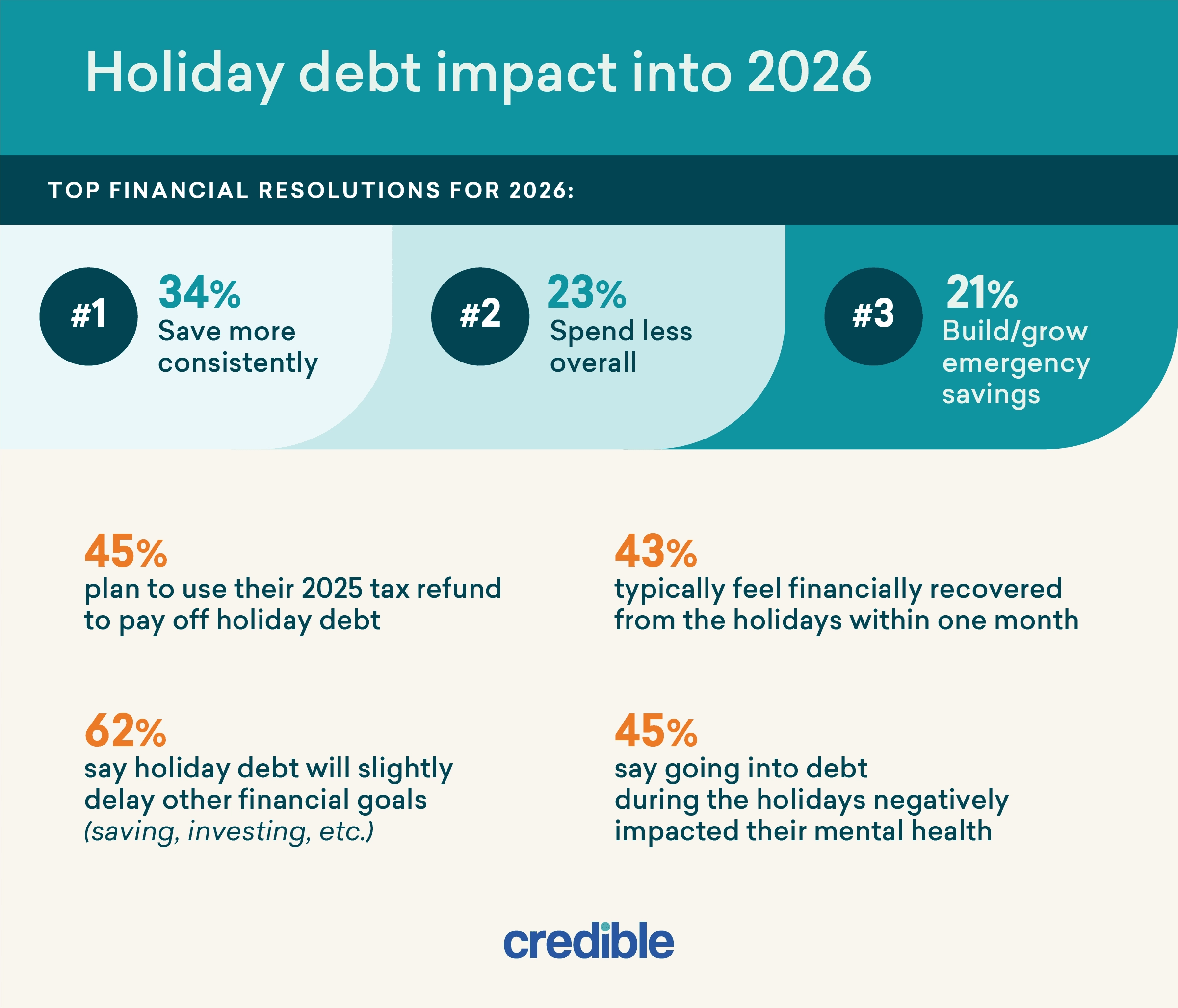
The most common resolutions for 2026 include saving more consistently (34%), spending less overall (23%), and building or growing emergency savings (21%).
Editor insight: “There are a host of financial tools and expert advice to help you save and budget better in 2026. But all of them require two things — that you monitor your finances (or monitor the apps monitoring your finances) and exhibit restraint. Whether it’s putting a moratorium on DoorDash, new clothes, impulse purchases, etc., choose one or more items to forgo for a few months. Then, use the extra to pad your savings or budget for a major expense.”
— Meredith Mangan, Senior Loans Editor, Credible
Almost half (45%) plan to use their 2025 tax refund to pay off holiday debt while 62% say holiday debt will slightly delay other financial goals (such as saving and investing). Beyond finances, the effects are personal: 45% say going into debt during the holidays negatively impacted their mental health.
Methodology
In December 2025, Credible commissioned Digital Third Coast and Prolific to conduct a survey of 1,002 people from across the U.S. about their holiday spending and debt. Among respondents, 49% identified as male, 49% as female, and 2% non-binary. The median age of respondents was 44.
For media inquiries, contact [email protected].
Fair use
When using this data and research, please attribute it by linking to this study and citing Credible.