


Credible takeaways
- Submit the FAFSA as early as possible to maximize your chances of receiving federal, state, and school-based aid with limited funding.
- The federal FAFSA deadline is June 30 of the corresponding academic year, but state and school deadlines may be much earlier.
- Review your financial aid offer before applying for private student loans so you know exactly how much you still need to borrow.
- Aim to complete private student loan applications by June or July before the fall semester to allow time for approval, school certification, and disbursement.
Federal and private student loans have different application deadlines, and knowing when to apply for each is an important part of your financial planning for college. No matter which type of loan you're applying for, it's best to do it as soon as you can. This helps ensure you don't miss important deadlines, giving you ample time to handle potential hiccups during the application, approval, and disbursement process.
Here's when to apply for both federal and private student loans, and some tips for borrowing wisely.
Compare private student loan rates
When to apply for federal student loans
For most borrowers, it's best to apply for federal student loans as early as possible in the college planning process. This starts with completing the Free Application for Federal Student Aid (FAFSA). This application allows you to access federal and state financial aid, and your college or university could also use it to award school-specific scholarships and grants.
The absolute latest federal deadline to submit the FAFSA is June 30 of the corresponding academic year. However, state and school-specific deadlines can be months earlier. It’s crucial to check the due dates for your specific circumstances.
The FAFSA for the 2026-27 school year was released in September 2025. Submitting it as soon as you can will keep you from missing critical deadlines and potentially help you qualify for more financial aid that doesn't need to be repaid. Certain types of aid have limited funding and are offered to students on a first-come, first-served basis. The earlier you complete your FAFSA, the better your chances of securing that kind of aid before it's gone.
See Also: How To Take Out a Student Loan
FAFSA deadlines
The FAFSA typically opens on Oct. 1 each year for the following academic year. Below are the federal FAFSA deadlines for the 2026-27 and 2027-28 school years. You’ll need to submit a new FAFSA for each academic year you need financial aid.
Some states and schools require students to apply before the federal deadline. Florida, for example, has a May 15, 2026, deadline for state financial aid programs for the 2026-27 school year, more than a year before the last federal deadline.
Federal student aid timeline
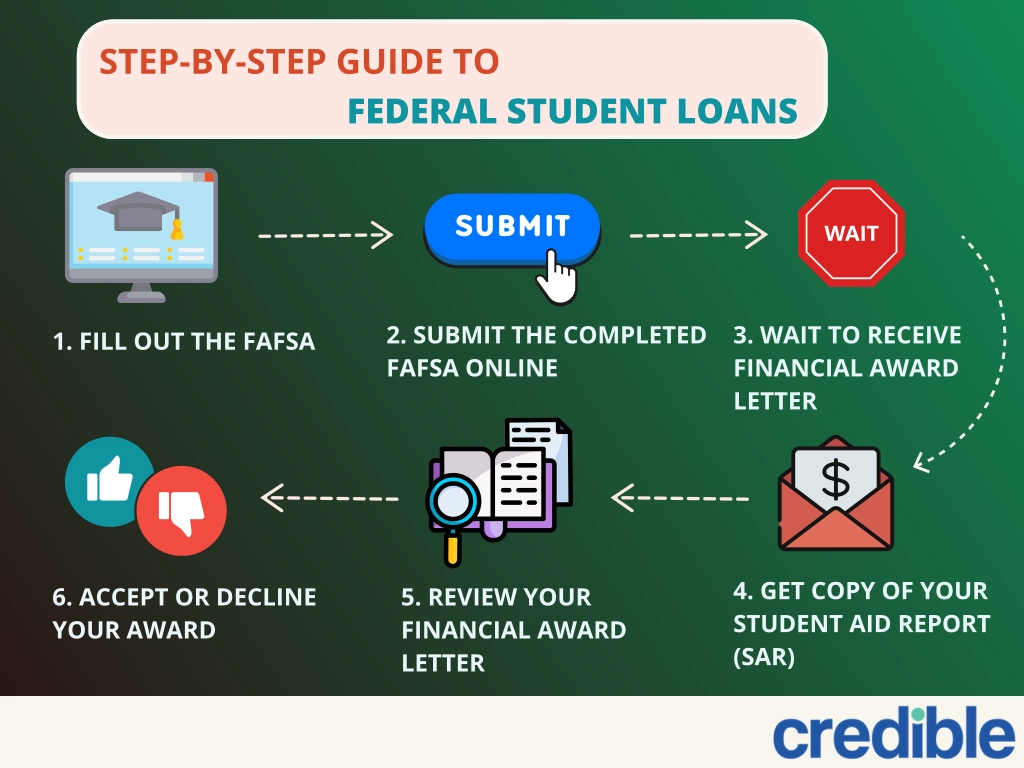
Here are the steps you’ll follow to apply for federal aid:
Editor insight: “I suggest contacting your school's financial aid office to confirm its internal FAFSA deadline, as meeting it could help you qualify for school-based aid. To avoid missing out on state-based aid, check the FAFSA state deadlines published each year on the Federal Student Aid website.”
— Renee Fleck, Student Loans Editor, Credible
When to apply for private student loans
Private student loans don’t have a universal application deadline, so you can apply throughout the year. For the fall semester, June or July is usually a good time to apply, especially if tuition is due in August or September. Applying one to two months before your bill is due gives you time for lender approval, school certification, and disbursement.
“Timing matters because it helps ensure you have the funds you need in place before tuition and other bills are due,” says Dr. Darla Bishop, author of “How To Afford College”.
Here’s how the private student loan process typically works:
- Apply with a lender: Once you know how much you need after scholarships, grants, and federal loans, compare private student loan rates and terms. Some lenders may approve applications quickly, while others may need additional review.
- Wait for school certification: After approval, your lender typically contacts your school to confirm your enrollment and total cost of attendance. This step can take 2 to 7 weeks, depending on your school, so it’s important to build in extra time.
- Receive the funds: Private student loan funds are generally sent directly to your school around the start of the semester. Your school applies the money to tuition and other eligible charges first, then sends you any remaining funds for education expenses such as housing, books, and supplies.

Good to know
A private student loan can take as long as a month to secure from application to disbursement.
How to plan your student loan application
To make sure you don't miss any important student loan application deadlines, here is a helpful timeline you can follow:
1. Create a checklist of required documents
Depending on the specific types of loans you apply for, you may need to provide several required documents. These may include:
- Your Social Security number
- Your parents' Social Security numbers if you're a dependent student
- Recent tax returns
- Records of child support payments received
- Current checking account, savings account, and cash balances
- Net worth of investments, businesses, and farms
2. Submit the FAFSA
Submitting the FAFSA as soon as possible will help ensure you meet all critical federal, state, and school deadlines and improve your chances of qualifying for first-come, first-served financial aid.
3. Coordinate with your school's financial aid office
After you submit the FAFSA, you'll need to wait for the financial aid award letters from the schools you've applied to. These letters will detail which federal student loans you're eligible for, as well as grants, scholarships, or other financial aid awards the school itself can offer you.
Once you receive your financial aid award letters, you can talk to the schools' financial aid offices to determine if there's a gap between your total award amounts and the cost of attendance. This can help you decide if you need to apply for a private loan to make up the difference.
4. Apply for private student loans
If you learn that your school costs will exceed your federal student aid and other financial awards, it's best to compare private student loan options as soon as possible. The earlier you can find the best private lender for your needs, the sooner you can apply for that loan. This will help ensure your loan funds are disbursed before your tuition due date.
FAQ
When does the FAFSA open each year?
Open
Can I apply for student loans after school starts?
Open
Do I need a cosigner for private student loans?
Open
What happens if I miss the FAFSA deadline?
Open
Can I apply for student loans before I’m accepted to college?
Open


