


Key findings
- A slim majority of respondents believe a bachelor's degree is worth the cost.
- Two-thirds say they wouldn’t take on student debt for a bachelor’s degree today.
- Most believe a bachelor’s degree should lead to a minimum annual salary of $60,000 to justify the cost.
- Trade schools outrank 4-year degrees for perceived return on investment (ROI).
- Nearly half of college graduates don’t believe their education provided a good ROI.
College has long been viewed as a path to higher earnings and better opportunities. But rising tuition costs, student debt, artificial intelligence (AI), and an increasing selection of nondegree career paths are changing how Americans evaluate the potential payoff of a college education.
A new Credible survey finds the country closely divided on whether a bachelor’s degree is still worth it, even among those who have earned one. It comes as federal student loans undergo a major overhaul, including tighter borrowing caps and narrower repayment options that make weighing the value of a degree against the cost of earning one a much less forgiving calculation.
A slim majority of Americans still see a bachelor's degree as worth the cost
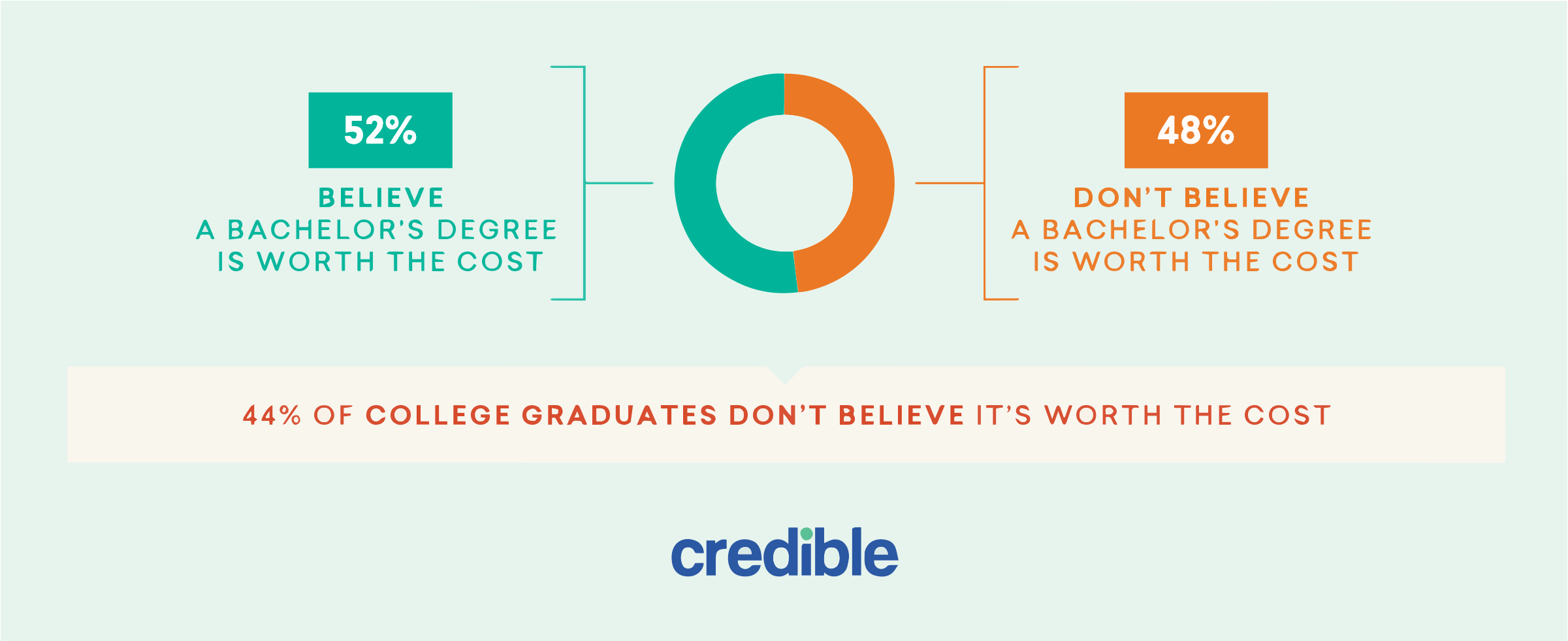
Americans are almost evenly split on whether a four-year degree is worth the cost: 52% say yes, 48% say no. Among college graduates, 44% are unconvinced that their own degrees have paid off.
Among those who believe college is worth the cost, top reasons include:
- Better job opportunities (90%)
- Higher lifetime earnings (78%)
- More opportunities for career advancement (70%)
However, not everyone sees those benefits as guaranteed, or enough to justify high tuition and years of student loan payments. Among respondents who said college isn’t worth the cost, top concerns include:
- Tuition is too expensive (94%)
- Student loans take too long to pay off (83%)
- Earning a degree doesn’t guarantee employment (82%)
College costs at a glance: The annual total cost of college, including tuition, fees, housing, food, books, and other educational expenses, averages $21,320 at community colleges, $30,990 at in-state public schools, $50,920 at public out-of-state schools, and $65,470 at private colleges, according to the College Board.
Nearly 2 in 3 Americans wouldn't take on student loan debt for college today
Americans may still see value in a college degree, but most aren’t willing to go into debt for one.
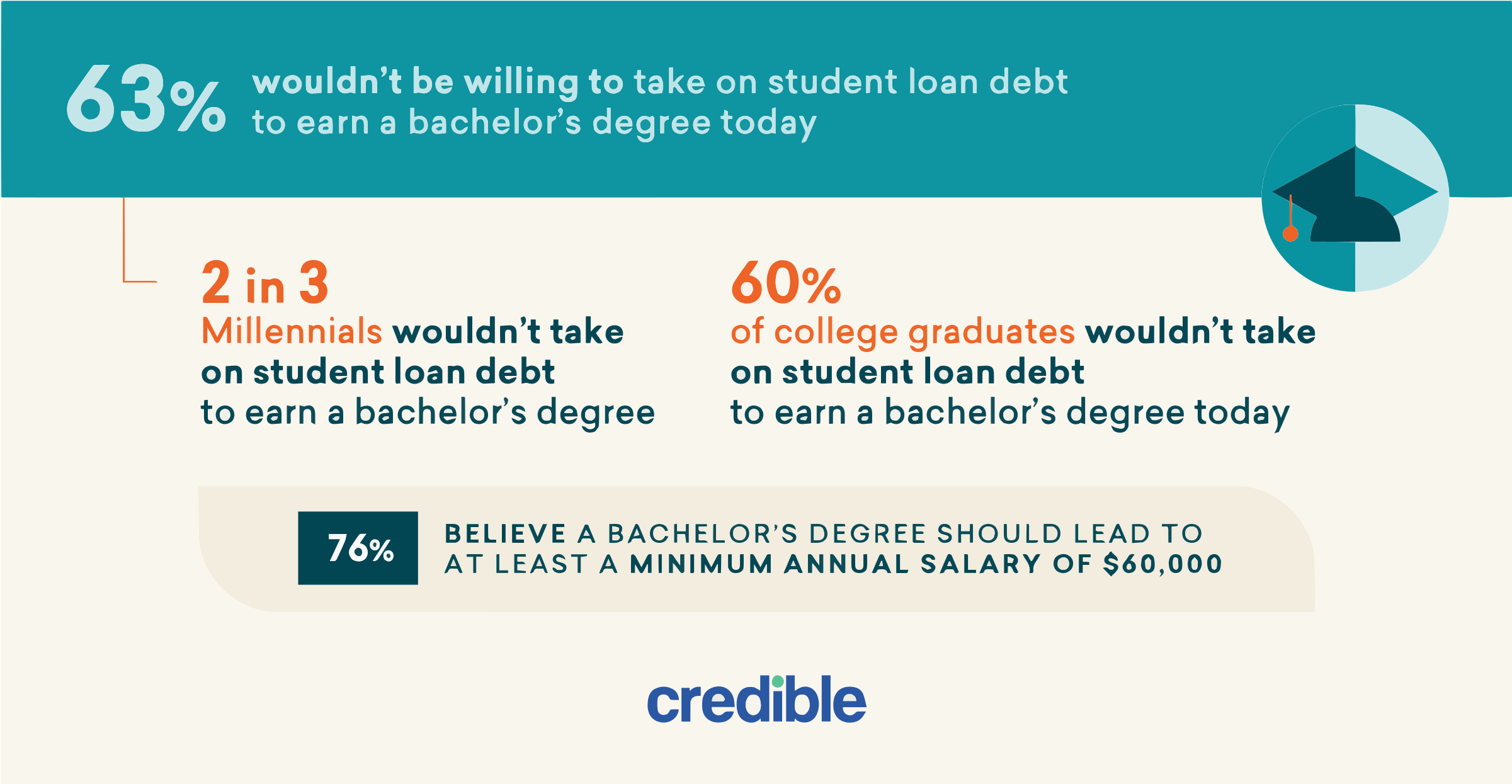
Nearly two-thirds of Millennials (the generation born between 1981 and 1996) say they wouldn’t take out student loans to earn a bachelor’s degree today. That includes people with firsthand experience, as the majority of college graduates (60%) wouldn’t make that same investment today.
Americans want manageable debt
Most respondents (88%) who identified what they consider a reasonable amount to borrow for a bachelor’s degree chose less than $40,000. For comparison, bachelor’s degree recipients graduate with an average of $29,560 in federal and private student loan debt, according to the College Board.
Americans also want to repay that debt quickly. Nearly half of those surveyed (47%) believe student loans should take fewer than five years to repay. However, that timeline may be difficult for graduates with large balances or modest starting salaries. Repayment terms on federal and private student loans typically start at 10 years, but many borrowers extend this to get lower monthly payments. This results in higher total loan costs due to paying more in interest.
Most say a degree should lead to at least a $60,000 salary
Americans expect a degree to deliver enough income to justify the debt. Most respondents (76%) said graduates should earn at least $60,000 annually for a bachelor’s degree to be considered worthwhile.
But evaluating that payoff isn’t always easy. Nearly 1 in 3 Americans say they don’t feel informed enough to make confident decisions about college costs and student loans.
Tip: If you need to borrow for college, the Consumer Financial Protection Bureau (CFPB) recommends keeping your total student loan debt below the amount you expect to earn in your first year after graduation. You can estimate your future earnings using the Bureau of Labor Statistics’ Occupational Outlook Handbook.
The federal student loan overhaul has shaken consumer confidence
Major changes to the federal student loan system are adding to Americans’ concerns about whether college is worth the cost.
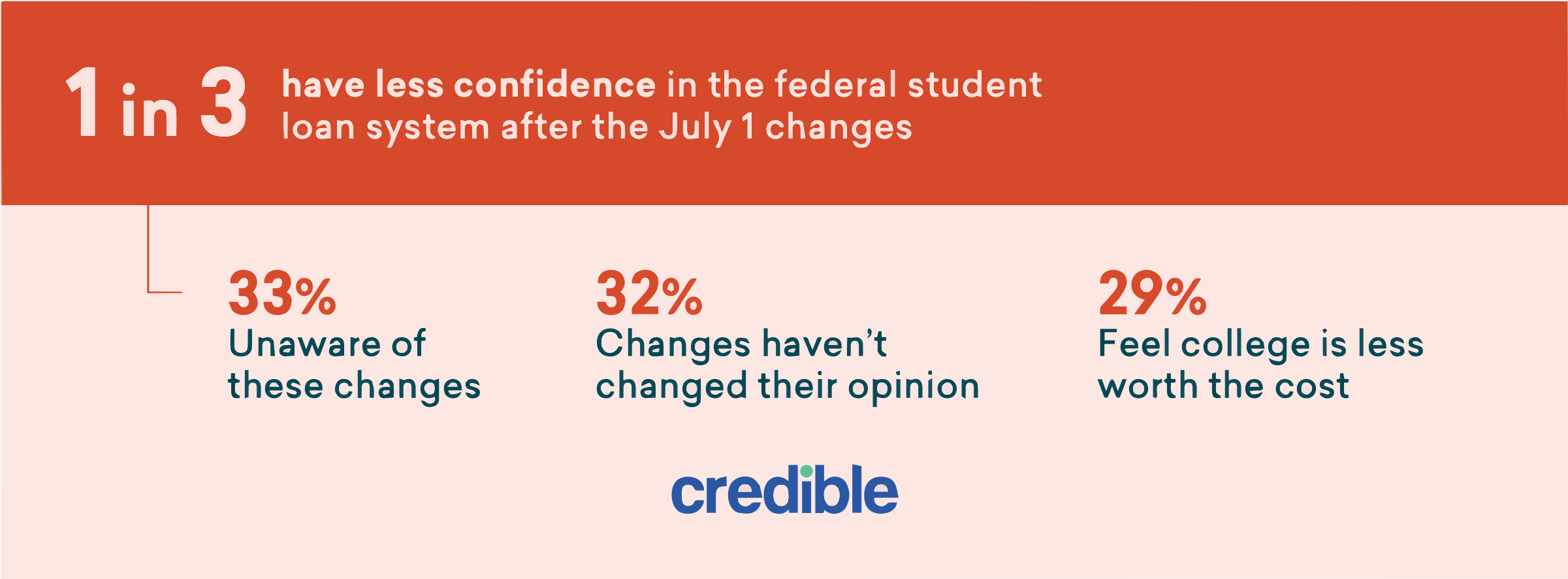
Nearly 1 in 3 respondents (29%) said the changes starting in the 2026-27 school year make a college degree feel less worthwhile. Another 33% said they now have less confidence in the federal student loan system.
Despite the potential impact, one-third of respondents said they were unaware of the overhaul. That’s an improvement from March 2026, when Credible found that 71% of Americans ages 18 to 61 said they were unaware of the July 1 changes.
“The biggest risk right now is assuming nothing about the federal student loan system has changed,” says Richard Richtmyer, managing editor for student loans at Credible.
“Repayment plans are less flexible than they used to be. Borrowing limits are tighter, especially for grad school. And the rules that worked for an older sibling or parent may not apply anymore. It's crucial to dig into the details yourself before you commit to a loan.”
Borrowers have less repayment flexibility
The federal student aid overhaul replaces more flexible legacy income-driven repayment options with the new Repayment Assistance Plan (RAP), which has a 30-year repayment term. It also introduces a Tiered Standard Repayment Plan that stretches payments over 10 to 25 years based on the amount borrowed. By comparison, the previous Standard Repayment Plan gave all enrolled borrowers a 10-year term.
Longer repayment periods may reduce monthly payments, but they can also keep borrowers in debt longer and increase the total amount they repay due to how much interest their debt accrues over time.
Graduate students face stricter borrowing limits
The changes are especially consequential for graduate and professional students. New borrowers can no longer use grad PLUS loans, which previously allowed students to finance up to their school’s total cost of attendance with federal loans. Instead, they face stricter annual and lifetime borrowing limits, and may have to rely on more expensive private student loans to fill funding gaps.
“Even after the overhaul, federal student loans generally remain the better first choice for most borrowers,” says Richtmyer. “Unlike private loans, they offer fixed interest rates regardless of your credit, access to loan forgiveness programs, and income-driven repayment options that can make payments more affordable if your income is low.”
More than half of Americans believe AI will make college degrees less valuable
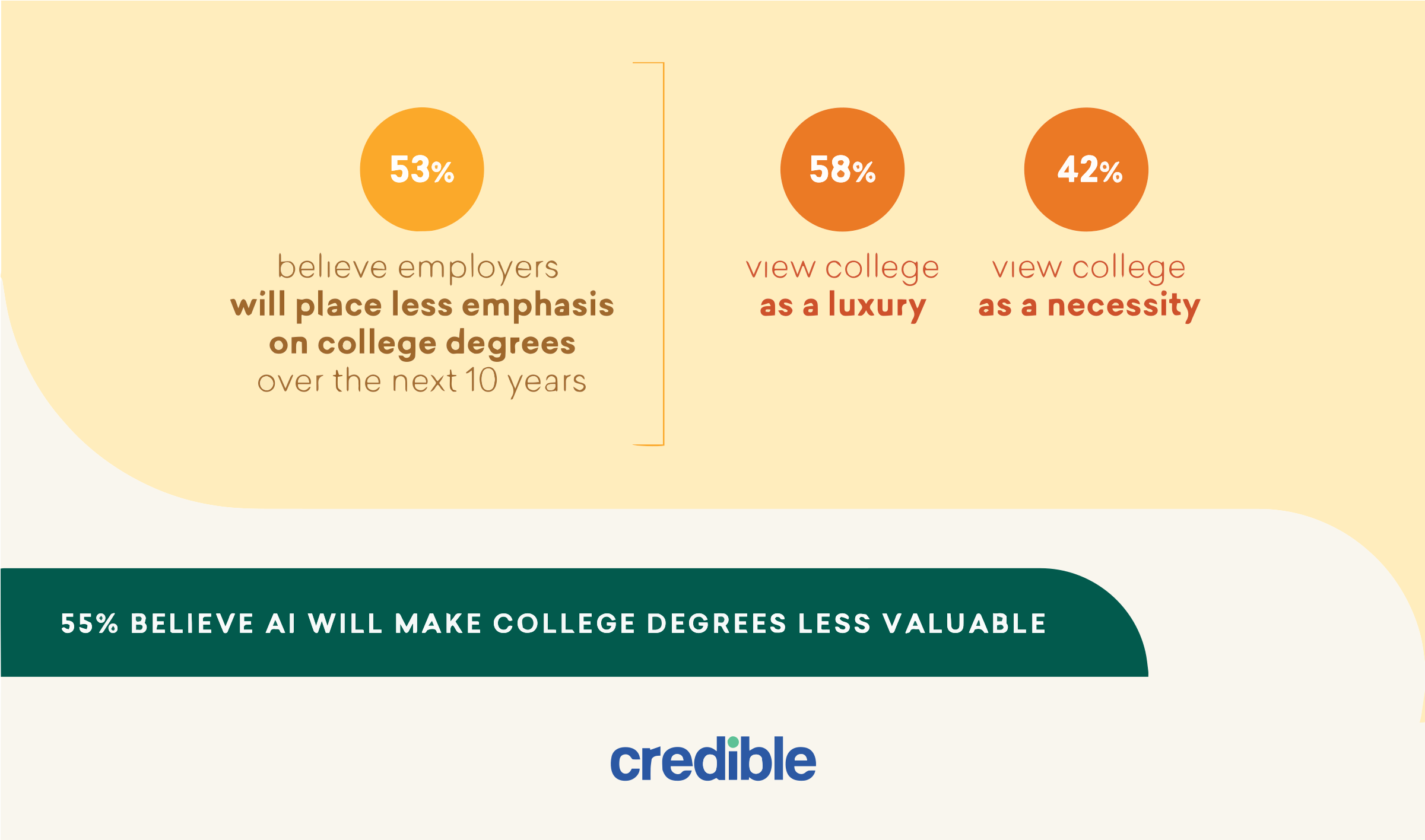
Americans’ doubts about college extend beyond tuition and student debt. More than half (55%) believe AI will make college degrees less valuable. A similar share (53%) expects employers to place less emphasis on degrees over the next decade.
“In today’s rapidly changing labor market, adaptability may be one of the most valuable skills young workers can develop,” says Brendan Price, an economist at LinkedIn.
Price adds that workers will need emerging AI-related expertise alongside essential human skills, including communication, critical thinking, and collaboration.
Many question whether college prepares students for work
Americans are also skeptical that colleges are keeping pace with a changing labor market. Nearly 6 in 10 respondents (58%) don’t believe college adequately prepares students for professional success.
That concern may help explain why college increasingly feels optional rather than essential. The survey found that 58% of Americans view college as a luxury, while 42% see it as a necessity.
These findings point to a larger shift in how Americans define career readiness. As practical skills and experience become increasingly important, many people no longer see a four-year degree as the only path to professional success.
Nearly 90% of Americans increasingly favor college alternatives
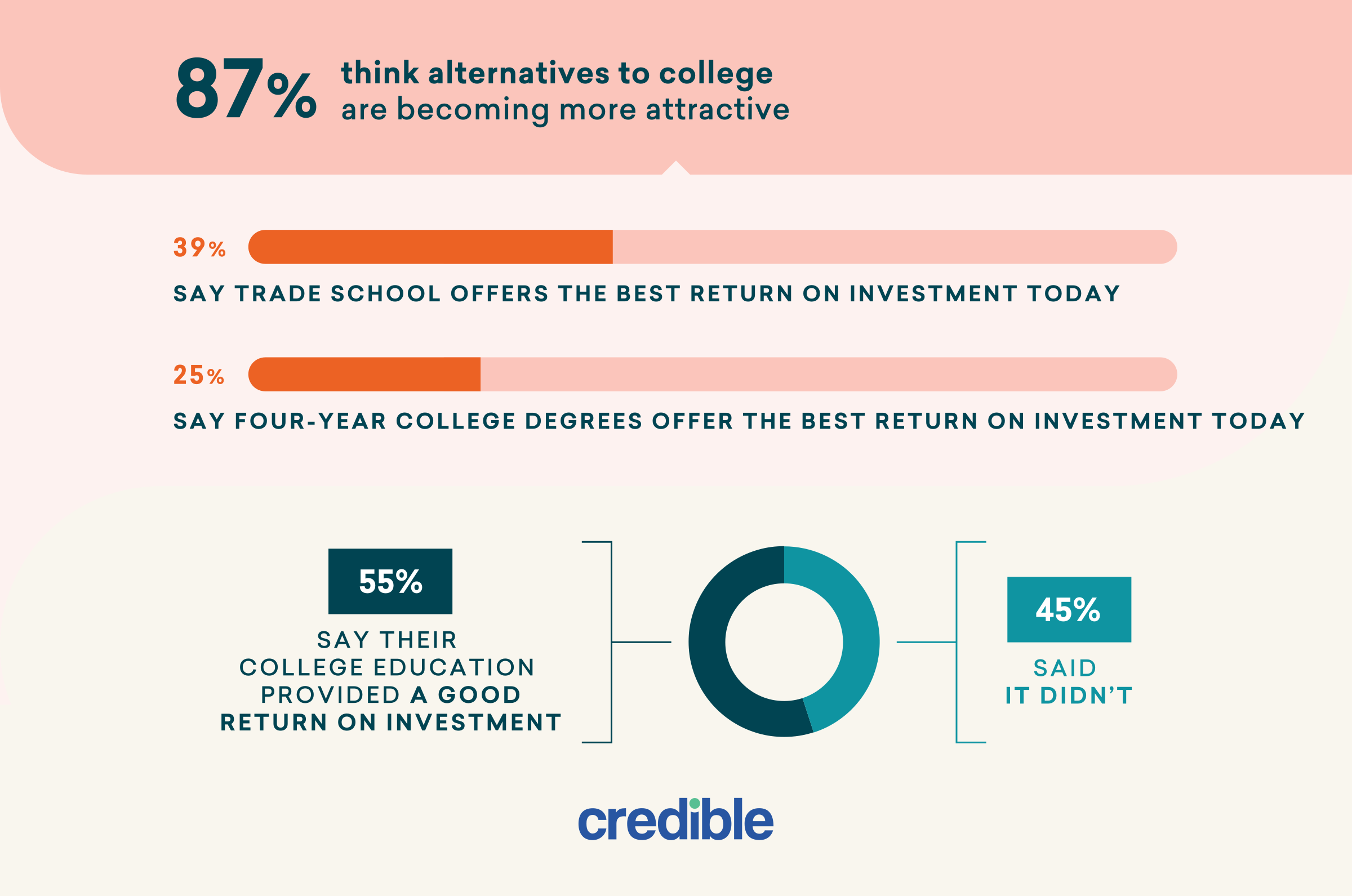
Americans are looking beyond four-year colleges when they think about career success. Nearly 9 in 10 respondents say alternatives to college are more attractive today than they were 10 years ago.
Trade school leads on perceived value
When asked which education path offers the best return on investment, 39% chose trade school. Just 25% selected a four-year college degree.
However, that doesn’t mean every trade or certificate program offers a strong return. Sara Haviland, an education and workforce policy researcher and founder of Petrel Research & Strategies, recommends looking beyond advertised salaries and carefully evaluating the specific program.
“Does it have real placement outcomes, active employer partnerships, and fees that make sense against what graduates actually earn?” Haviland says.
Students should also review completion rates before enrolling.
“Non-completion is what wrecks the ROI math,” Haviland says. “You’re left with the debt and none of the earnings bump.”
Haviland also cautions against choosing a path based solely on which field appears to pay the most today, since earnings and hiring demand can shift quickly. Students should consider whether they are genuinely interested in the work and likely to finish the program.
Experience and skills matter more than degrees
Respondents also ranked practical career skills above college credentials. The three factors they believe matter most for professional success in 2026 are:
- Work experience (74%)
- Networking and connections (64%)
- Professional skills and certifications (52%)
Many college attendees still question the payoff
That skepticism is also evident among people who attended college, who made up 84% of survey respondents. While 57% would make the same college decision again, 43% would choose differently. Similarly, 55% said their education delivered a good return on investment, while 45% said it did not.
Methodology
In July 2026, Credible commissioned Digital Third Coast and Prolific to conduct a survey of 1,007 adults across the U.S. Among respondents, 49% identified as male, 50% as female, and 1% non-binary/rather not say. The respondents represented 49 states and had a median age of 37.
For media inquiries, contact [email protected].
Fair use
When using this data and research, please attribute it by linking to this study and citing Credible.


