Credible takeaways
- Federal student loan eligibility is based on your FAFSA answers, citizenship status, and enrollment in an eligible school.
- Most federal student loans don’t require a credit check or minimum income.
- Private student loan requirements vary by lender, but you typically need a good credit score, steady income, or a cosigner to qualify.
Student loans are a key part of college financing for many students, especially when scholarships, grants, and personal savings fall short. In fact, about 30% of adults who pursued higher education needed to borrow for school, according to the Federal Reserve. If you’re weighing your options, understanding the types of loans available and how the student loan application process works is essential to covering your education costs responsibly.
This guide walks you through how to get both federal aid and private student loans — from filling out the FAFSA to comparing lenders and preparing for student loan approval.
Compare current private student loan rates
Federal vs. private student loan requirements
Federal and private student loans have different eligibility requirements. Federal student loans are based mainly on your FAFSA, school enrollment, and citizenship status, while private student loans are based more heavily on your credit score, income, and ability to repay the loan.
| ||
Federal student loan requirements
Federal student loans require filling out the Free Application for Federal Student Aid (FAFSA). Schools use the FAFSA to determine your eligibility for various financial aid, including federal student loans, scholarships, grants, and work-study opportunities.
Undergraduate loans don't require a credit check and have fixed interest rates, but include borrowing limits on certain loan types. Federal loans have different repayment options and benefits, including income-driven repayment plans and loan forgiveness. Because of this, you want to exhaust federal loans before turning to private lenders.
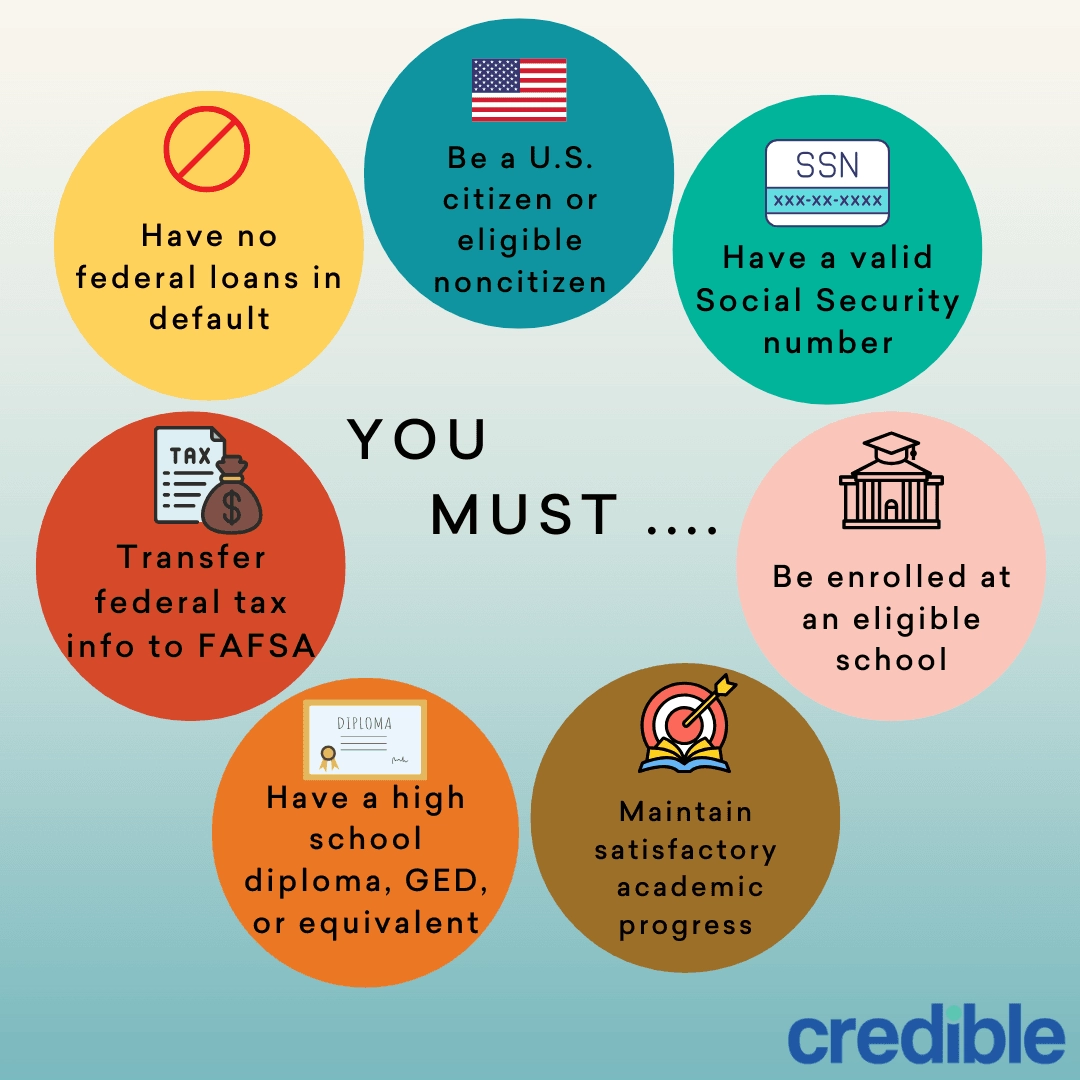
To be eligible for federal student loans means:

Good to know
There is no income cut-off to qualify for federal student aid. However, factors like the size of your family and academic year are considered when calculating how much aid you qualify for.
How to apply for a federal student loan
The government limits how much you can borrow in student loans each year and over your lifetime, depending on your academic level and dependency status. Dependent students must have a contributor, like a parent, provide their information, including a consent to transfer tax data directly from the IRS to the FAFSA application. Contributors must also sign up for an FSA ID to complete their sections and sign the FAFSA form.
Here's what do you need to complete in order to qualify for a federal student loan:
- Create a FSA ID: You must create a Federal Student Aid (FSA) ID — a unique username and password required to complete the FAFSA and access your account on StudentAid.gov.
- Fill out the FAFSA: The FAFSA application opens around Oct. 1 every year. It's available online and typically takes less than an hour to complete. You'll need your Social Security number, date of birth, email, and details about your income and assets (or your parent's, if applicable).
- Sign and submit the FAFSA: After you (or your parents, if applicable) have completed the FAFSA, sign and submit it.

Important
The 2026-27 FAFSA is open through June 30, 2027, but state and school deadlines could be sooner. Some aid is on a first-come basis, so submit your FAFSA as soon as possible but check your school’s financial aid office for specific deadlines.
FAFSA income limits
After submitting the FAFSA, schools where you were accepted will send you a financial aid award letter outlining the types of aid you qualify for. This can include scholarships, grants, federal work-study, and federal student loans:
Federal need-based financial aid
The school you're attending determines your financial need by using this formula: cost of attendance (COA) - SAI = financial need. Need-based financial aid programs include:
- Federal Pell Grant: These grants don't have to be repaid, except under certain circumstances. Your eligibility is determined mostly by financial need and a few other factors, including citizenship status, academic enrollment, and academic progress, to name a few.
- Direct Subsidized Loans: Formerly called Stafford Loans, the government pays the interest on these loans while you're in school and during the 6-month grace period following graduation, reducing your overall borrowing costs. The school determines how much you can borrow, and the amount can't exceed your financial need.
- Federal Supplemental Educational Opportunity Grant (FSEOG): This need-based grant that offers for between $100 and $4,000 per year by participating schools for undergraduate students with exceptional financial need.
- Federal Work-Study: This provides part-time jobs for undergraduate and graduate students with financial need, allowing them to earn money to help pay education expenses. The program encourages community service work and work related to your course of study.
These types of federal loans aren't based on your financial need:
- Direct Unsubsidized Loans: Available to both undergraduate and graduate students and don't require proof of financial need, making them more accessible. The amount you can borrow is determined by your school's cost of attendance, less any other financial aid you receive. You're also responsible for paying the accrued interest.
- Direct PLUS Loans: Graduate students and parents of dependent undergraduate students can apply for PLUS loans, also called parent PLUS loans or grad PLUS loans. To qualify, you usually have to have good to excellent credit.
Direct Subsidized and Unsubsidized Loans have borrowing limits for how much money you can receive, which depend on your academic year in school and dependency status. PLUS loans help cover your school's full cost of attendance after any other financial aid you may receive.
If your application is denied, it could be because you don't meet the eligibility criteria or need to provide additional documentation. Graduate students and parents applying for PLUS loans may face another potential obstacle.
“For federal loans, this would come from an adverse credit history. You could obtain an endorser, who agrees to pay your loans if you do not. You can also file an appeal if there are extenuating circumstances,” says Erik Kroll, certified financial planner and president of Student Loans Over 50.

Tip
Making small payments while you’re in school or during deferment or forbearance can help with accrued interest and reduce the overall cost of your loan.
After reviewing your financial aid offers and choosing a school, you can officially accept your federal aid. Start with any grants and scholarships because they don't have to be repaid. If you've qualified for a Direct Subsidized Loan, prioritize it next since it's usually a more cost-effective option. Remember only to borrow what you need to cover your educational expenses.
If you're a first-time borrower, you'll also have to complete entrance counseling to understand your responsibilities and to sign a Master Promissory Note agreeing to the loan terms.
Federal loan funds are sent to your school first to cover tuition, fees, and, if applicable, room and board. If money is left over, the school sends you the remaining balance, which can only be used for qualified educational expenses, like textbooks, supplies, or electronics.
Check Out: What Is the Average Cost of College?
Private student loan requirements
If you've maxed out your federal student loan options, private student loans can help cover any remaining balances. Lenders may let you borrow up to the full cost of attendance, but eligibility depends on several factors, like credit history and income (or that of a cosigner).
These loans should generally be a last resort because they lack the protections and benefits federal loans offer, including forgiveness programs and specific repayment plans.
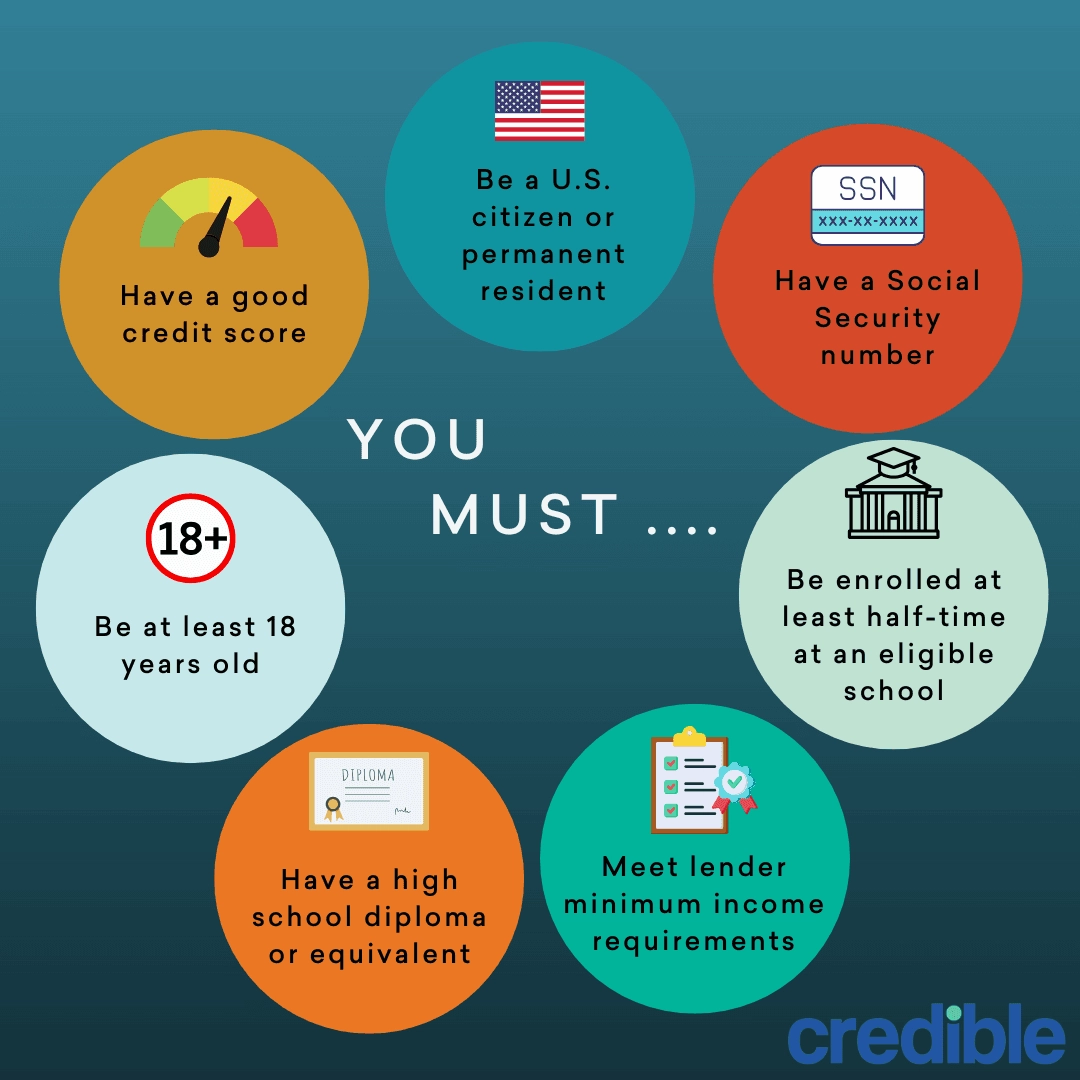
Every lender has different eligibility requirements, but in general:
Eligibility for private student loans
The eligibility criteria for private student loans are similar to those for federal loans, but go a step further by checking credit scores and income. Every lender has different qualifications, but in general:
Editor insight: “If you're an undergraduate student applying for private student loans, you'll probably need a cosigner, especially if you have little or no credit history or aren't earning an income. I recommend preparing a detailed repayment plan before asking someone to cosign, as they'll be responsible for the debt if you fail to pay it.”
— Renee Fleck, Student Loans Editor, Credible
Credit score and history
Private lenders check your credit score and income to determine your eligibility and the interest rate you're offered. Most lenders require a minimum credit score — often around 670 — and can reject applications from those who don't meet their criteria. You'll likely need a cosigner to qualify if you have limited or bad credit. The interest rate will likely be lower than if you apply alone.
Note
Review your credit report and check for errors that can bring down your score. If you notice any, contact the major credit bureaus (Experian, Equifax, and TransUnion) to dispute them.
Income
Beyond credit requirements, most lenders also expect applicants to meet a minimum income threshold. Some let you know ahead of time what that amount is, but most don't. Higher earnings can improve your chances. To verify your income and employment, lenders usually request documentation from both you and your cosigner.
Debt-to-income ratio
Lenders use your debt-to-income ratio (DTI) to evaluate how much of your monthly income goes toward debt. A lower DTI suggests you can handle new loan payments more easily.
School and program
Some lenders only approve loans when you attend certain accredited schools or are enrolled in specific degree programs. Your enrollment status (half- or full-time) may also be a determining factor since most (not all) lenders require borrowers to be in school full time.
Loan amount and terms
Private student loan lenders will assess how much you need to borrow and the repayment term you choose. Larger amounts or longer terms may mean stricter qualifications. Each lender has minimum and maximum loan amounts to make sure they can meet your borrowing needs. Most lenders offer 5-, 7-, 10-, 15-, and some even 20-year repayment term options.
After submitting your application, the lender reviews your information and can either approve or deny your application, or ask that you provide additional documentation, which you should respond to as soon as possible to avoid delays. When your application is denied, the lender should explain the reason they rejected it.
If approved, the lender will typically send funds directly to your school to cover your tuition, fees, and room and board that's not already covered by federal aid you might have received. Any remaining funds will be disbursed to you to cover other education-related expenses, such as textbooks or supplies.
Tips for choosing the best student loan
Federal student loans are almost always the best place to start because of their competitive, stable rates, flexible repayment options, and borrower protections. Private loans can help cover remaining costs, but should be used cautiously.
When you're comparing loans, calculate the total borrowing costs. Tools like the Federal Student Aid's loan simulator or a student loan repayment calculator can help you better understand how interest rates, loan terms, and repayment plans will affect your overall payments.
“Misinformation has been rampant as the federal student loan litigation makes its way through the courts, so it's important that borrowers reach out directly to their loan servicers with questions about student loan relief, or to certified credit counselors with expertise in student loans working for nonprofit credit counseling organizations,” advises Donna Loitz, housing and student loan counselor lead at American Financial Solutions.
Prequalify with multiple private loan lenders to see interest rates and loan terms you might qualify before officially applying. Most lenders offer this option without affecting your credit score since it involves a soft credit check instead of a hard inquiry. A hard inquiry usually only happens when you submit a full loan application.
FAQ
How do I apply for student loans step-by-step?
Open
What is the best way to borrow for school?
Open
What happens after my student loan application is approved?
Open
Is it hard to get approved for student loans?
Open
Do I qualify for FAFSA if my parents make a lot of money?
Open
How often do you need to apply for a federal student loan?
Open
For student loans that require a cosigner, who is that person?
Open
When do you need to apply for a federal student loan?
Open
How long does it take to get approved for a student loan?
Open